Do you know what hydroentangled nonwoven fabric is? You might be familiar with nonwoven fabrics in general, but the name "hydroentangled nonwoven fabric" might sound unfamiliar. In fact, hydroentangled nonwoven fabric is one type of nonwoven fabric, and we frequently use products made from it in our daily lives, such as wet wipes, facial tissues, and disposable cleaning cloths. Today, we will introduce you to hydroentangled nonwoven fabric, a material closely related to your daily life.
Nonwoven fabric is a type of fabric that doesn't require weaving. It's made by arranging viscose fibers, polyester fibers, and other materials in a directional or random manner to form a fibrous network structure, which is then reinforced using mechanical, chemical, or thermal bonding methods. Simply put, the fibers are bonded directly together, rather than being interwoven with yarn. Therefore, when you hold a piece of nonwoven fabric, you'll notice that it doesn't have warp and weft threads, and you can't pull out any loose threads. It's easier to cut, sew, and shape. Nonwoven fabric has the characteristics of a short process flow, a wide range of raw materials, fast production speed, low cost, high output, a wide variety of products, and broad applications. It can also be made into fabrics of different thicknesses, textures, and stiffness according to requirements. Nonwoven fabric not only breaks through traditional textile principles but also provides many conveniences for our lives.
Nonwoven fabrics can be divided into wet-laid nonwoven fabrics and dry-laid nonwoven fabrics according to the manufacturing process. Wet-laid refers to the final formation of the nonwoven fabric in water. This process is commonly used in papermaking. Dry-laid refers to the final formation of the nonwoven fabric in the air, including thermal bonding (meltblown, spunbond, thermal bonding), needle punching, hydroentangling, and chemical bonding.
Spunlace nonwoven fabrics utilize a wide variety of fiber raw materials, including wood pulp fibers, viscose fibers, polyester fibers, polypropylene, nylon, microfiber, lyocell fibers, silk, bamboo fibers, and seaweed fibers. The most widely used raw materials for spunlace nonwoven fabrics on the market are wood pulp fibers, viscose fibers, polyester fibers, and polypropylene.

Wood Pulp Fiber
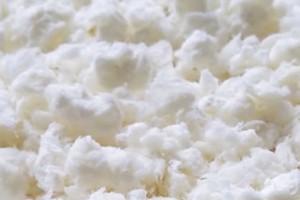
Wood pulp fiber is a type of fiber made from wood pulp, but it differs from ordinary plant fibers. It is a secondary fiber, a product separated from raw wood fibers, and is widely used in the textile industry. Because it is primarily extracted from wood pulp, we call it wood pulp fiber, which is similar to paper pulp. Wood pulp fiber has high liquid absorption capacity and is biodegradable.
Viscose Fiber
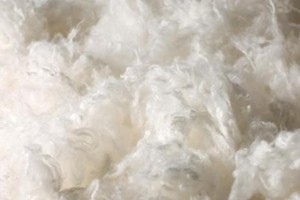
Viscose fiber is a type of cellulose fiber, made from 'wood' as the raw material. It is extracted from natural wood cellulose, and the fiber molecules are reshaped to obtain cellulose fibers. Specifically, viscose is made from natural fibers (wood pulp, cotton linters) as raw materials, through processes such as alkalization, aging, and sulfonation of soluble cellulose xanthate. It is then dissolved in a dilute alkaline solution and spun using a wet spinning method, resulting in viscose fiber. Viscose fiber has excellent water absorption, and features such as coolness, breathability, antistatic properties, UV resistance, good color fastness, and biodegradability, meeting the needs of human skin. It possesses the essence of cotton and the quality of silk, originating from nature and surpassing nature. Currently, viscose fiber spunlace nonwoven fabric is widely used in various cleaning and wiping applications such as wet wipes, soft cotton wipes, and cleaning cloths.
Polyester Fiber
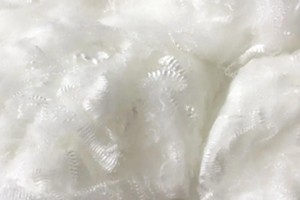
Polyester fiber, commonly known as "polyester," was invented in 1941. It is a synthetic fiber made from the polycondensation of an organic dibasic acid and ethylene glycol, followed by spinning. It is a high-molecular-weight compound and currently the most widely used type of synthetic fiber. It possesses high strength and elastic recovery, good wrinkle resistance and shape retention, as well as good heat resistance, water absorption, and oil absorption. It is strong and durable. Due to its characteristics, polyester is widely used in textiles and non-woven fabrics.
Polypropylene
Polypropylene is a polymer formed by the polymerization of propylene. It is a byproduct of petroleum refining and is not biodegradable. It is lightweight yet strong, possesses excellent abrasion resistance and elastic recovery, and has superior chemical resistance compared to most fibers. Furthermore, it is antibacterial, safe, and hygienic. In addition, polypropylene is oil-resistant, easy to wash, and quick-drying, making it widely used in oil-based cleaning applications.